
Debrief
Who builds the next great kids’ IP?
Cannes is no longer only asking what children will watch next. The bigger question is who will build the next franchise (a studio, a creator, a platform-native team or an AI-enabled company) and what it will take to earn a real place in family life.
The platform may change. The job does not: build something families want to carry forward.
Before Cannes
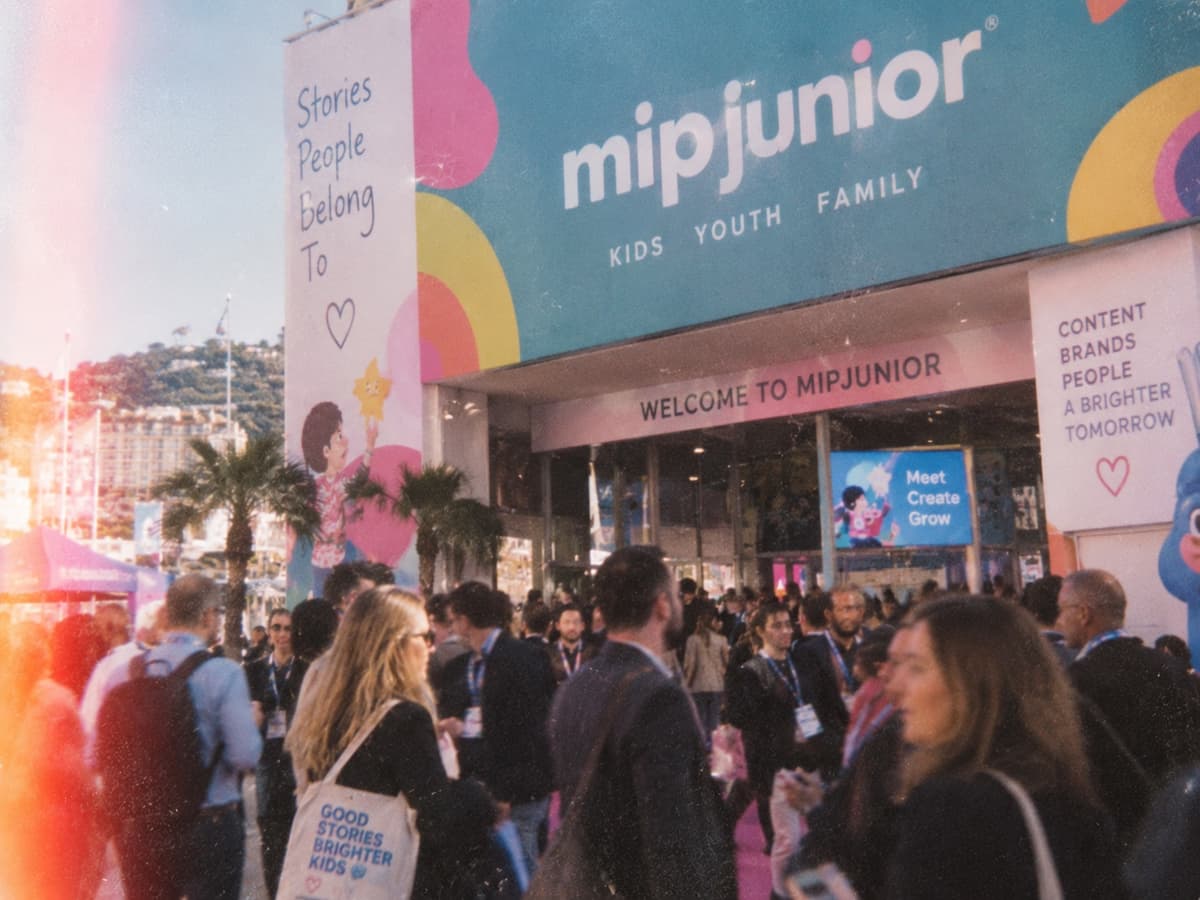
MIPJUNIOR opens in Cannes on 10 October, followed by MIPCOM from 12 to 15 October.
The programme itself tells us where the tension is.
MIPJUNIOR is widening beyond traditional preschool and children’s television into tweens, teens, digital-first entertainment, social platforms, new business models and scalable IP. Evan Shapiro is looking at the economics of kids and family content in a fragmented media landscape. Ampere Analysis is tracking production, commissioning, streamers, AVoD, social and the leading kids’ YouTube channels. Gregory Dray of Animaj is headlining a conversation about reinventing legacy IP for digital generations.
None of those are really television questions.
They are questions about where IP begins, who gets to build it and what makes it survive.
The Famdom read
For decades, the industry had a recognisable sequence.
Create the show. Find the broadcaster. Build the audience. Extend into licensing if it works.
That sequence is breaking apart.
A creator can build the audience before there is a traditional buyer. A game can create characters before there is a series. A YouTube channel can become an entertainment business. A legacy IP can be rebuilt around platform-native behaviour. AI can change the economics and speed of production before anyone has agreed what authorship should mean.
The result is not simply more competition.
It is more possible starting points.
That makes the family role of an IP more important, not less.
Question 01: Who owns discovery now?
Children do not discover content through one gate.
They meet characters through YouTube clips, streaming interfaces, games, memes, siblings, creators, music, toys, search and the recommendation systems around all of them.
That changes power.
The broadcaster or streamer may still finance, distribute or legitimise an IP, but they no longer necessarily create the first relationship.
For Famdom, the important question is not only where an IP launches.
It is where the relationship begins, and who inside the family carries it somewhere else.
Question 02: Does an IP need an audience before it needs a buyer?
Digital-first companies are increasingly reversing the old logic.
Instead of pitching a concept and waiting for distribution, they build proof of audience behaviour first.
That can make an IP easier to finance and easier to sell. But audience data is not the same as family meaning.
Views can prove attention. Repeat viewing can suggest habit. Comments can reveal language. Merchandise can reveal identity. A child asking a parent for the same character again can reveal something entirely different.
The strongest IP businesses will learn to distinguish audience traction from family depth.
Question 03: What should AI accelerate, and what should it never replace?
Animaj is an especially useful case to watch.
The company describes itself as AI-native and digital-first, backed by Google’s AI Futures Fund, with AI embedded in parts of its production pipeline while creators remain in control.
That model makes the real question clearer.
AI can shorten production cycles. It can remove repetitive work. It can help test formats and respond to audience signals faster.
But speed is not authorship.
Children’s entertainment carries trust, developmental responsibility, cultural meaning and memory. The more efficiently content can be produced, the more valuable human editorial judgement becomes.
Our position is simple: AI should increase what authors can make, not remove the author.
Question 04: Are age buckets still enough?
MIPJUNIOR’s expansion from preschool and kids into tweens and teens reflects something we see inside families all the time.
Age is real. But culture travels sideways.
A younger sibling watches what an older sibling already chose. Parents reintroduce characters from their own childhood. Teenagers carry memes into the home. Children move between content made “for them” and culture they found somewhere else.
That means age targeting remains useful, but it cannot explain the whole journey.
For family-first companies, the better map includes age, role, influence, permission and who changes the decision as it moves through the household.
Question 05: What makes an IP travel?
The next big franchise will not win simply because it exists on more platforms.
It will travel because the same core meaning can survive different behaviours.
Watch it. Play it. Quote it. Collect it. Wear it. Share it. Ask for it. Give it. Return to it years later.
That is where licensing, gaming, social, publishing, music, live experiences and merchandise stop being extensions around the edge of the IP.
They become different ways the IP lives inside family life.
Creators are now part of the studio system
YouTube’s expanded presence at MIPCOM and MIPJUNIOR is another signal.
Creators are no longer simply marketing channels for finished entertainment.
Some are becoming development pipelines, distribution systems, audience laboratories and IP owners at the same time.
That creates a different commercial question for traditional studios and brands.
Do you buy reach from a creator? License their IP? Co-produce with them? Build a franchise together? Or learn from the way they create direct relationships with families?
Calling all of that “influencer marketing” is no longer useful enough.
What we are taking into the room
We are not going to Cannes looking for one prediction about the future of kids’ entertainment.
We are looking for evidence of where value is moving.
Who owns the first relationship with the child? Who earns the parent’s trust? Who understands the sibling effect? Who can turn attention into participation? Who can move from a platform moment into products, rituals and shared memory? And who can do all of that without treating children as an engagement metric?
The next great IP could begin with a studio, a creator, a game, a book or an AI-enabled production system.
Families will decide whether it becomes anything more.
What this means for family-first companies
For companies building entertainment, toys, licensing or kids’ media, the safest strategy is not to choose one future and bet everything on it.
It is to build an IP system capable of learning.
Start with the family tension or desire. Understand who carries the relationship. Build the character or story around a role worth earning. Use platforms for what they are good at. Use creators where trust already exists. Use AI where it increases creative capacity. Use licensing where it gives fandom something meaningful to do.
And keep listening after launch.
Because the next great kids’ IP will not be defined by where it was born.
It will be defined by how far families choose to take it.
Inside this Debrief
- Who owns discovery when kids move between platforms, creators and games
- Why audience traction is not the same as family meaning
- Where AI can accelerate production without replacing authorship
- Why age targeting alone cannot explain how IP moves through a household
- How creators are becoming studios, distributors and IP owners
- What makes an IP travel from attention into participation, ritual and belonging
Sources and verification
- MIPJUNIOR, 2026 programme coverage: Total Licensing, 2 July 2026.
- MIPJUNIOR 2026 overview and programme summary: Prayan Animation, 20 August 2026.
- MIPCOM CANNES official site: 12 to 15 October 2026, Palais des Festivals, Cannes.
- YouTube / MIPCOM partnership coverage: Total Licensing, 2026.
- Animaj, Google AI Futures Fund partnership announcement, 4 March 2026.
Editorial note: Event dates, programme speakers and company facts are sourced from current MIPJUNIOR/MIPCOM and company materials. The five questions, the interpretation of how IP moves through family life and the recommendations for companies are Famdom Observatory’s editorial view.
Full Debrief
Get the full Debrief
Leave your details and the full Debrief is yours: the fieldwork, the three learnings and what a brand does with them.
That did not go through. Please check your details and try again.
Also in the Observatory

Questions about this piece
What questions is Famdom taking to Cannes?
Ahead of MIPJUNIOR on 10 October and MIPCOM from 12 to 15 October, the Debrief asks who will build the next great kids’ IP: a studio, a creator, a platform-native team or an AI-enabled company. It sets out five questions: who owns discovery, whether an IP needs an audience before a buyer, what AI should accelerate, whether age buckets are enough and what makes an IP travel.
Why does this matter for family-first companies?
The traditional sequence of show, broadcaster, audience and licensing is breaking apart, which means more possible starting points for an IP. That makes the family role of an IP more important, not less. The Debrief recommends building an IP system capable of learning: start with the family tension or desire, understand who carries the relationship and build the story around a role worth earning.
What role should AI play in kids’ entertainment?
AI can shorten production cycles, remove repetitive work and help test formats and respond to audience signals faster. But speed is not authorship. Children’s entertainment carries trust, developmental responsibility, cultural meaning and memory, so the more efficiently content can be produced, the more valuable human editorial judgement becomes. Famdom’s position is that AI should increase what authors can make, not remove the author.