
Debrief
The most digital trend of 2026 is wanting less digital.
The analogue bag, handwritten letters, games, puzzles and crafts are all part of the same signal: families are not rejecting technology. They are looking for better reasons to put it down.
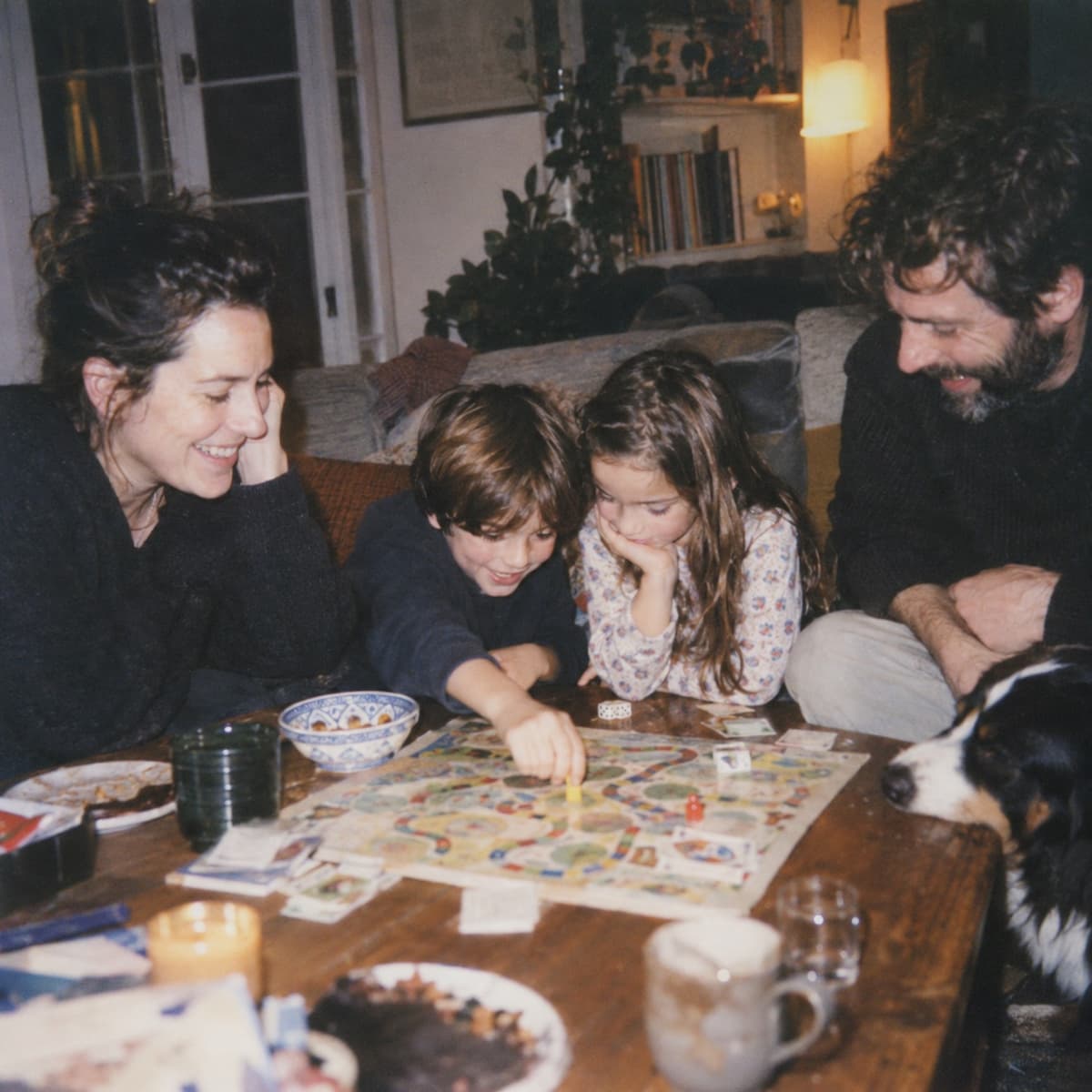
Families do not need another lecture about screens. They need better things to do together.
What we found
Going analog is becoming one of the most visible counter-signals to the always-on digital culture of 2026.
The analogue bag became a recognisable social trend: a tote filled with books, crosswords, sketchbooks, knitting, watercolours or other screen-free activities to reach for instead of the phone.
Pinterest’s 2026 trend report points to a similar revival through “Pen Pals”, with searches rising for handwritten letters, stamps and snail-mail gifts.
In toys, Arts & Crafts grew strongly in the first half of 2026 in the US, while Games & Puzzles also continued to gain.
And around all of this sits a much larger cultural argument about childhood: delay smartphones, reduce social-media exposure and give children more independence and real-world play.
The contradiction is obvious.
Much of the analogue revival is being discovered, filmed and shared on the very platforms people are trying to escape.
The Famdom read
That contradiction is not a weakness.
It is the insight.
Families are not choosing between a digital life and an analogue life.
They are trying to rebalance one life that contains both.
The phone can help someone discover a board game. TikTok can make knitting culturally relevant again. Pinterest can inspire handwritten letters. YouTube can teach a parent and child a craft they later do together offline.
Digital discovery can create analogue behaviour.
For family-first companies, that is far more useful than an anti-screen position.
The problem is not the screen. It is what the screen replaces.
Screen time is easy to count.
What it displaces is harder to measure.
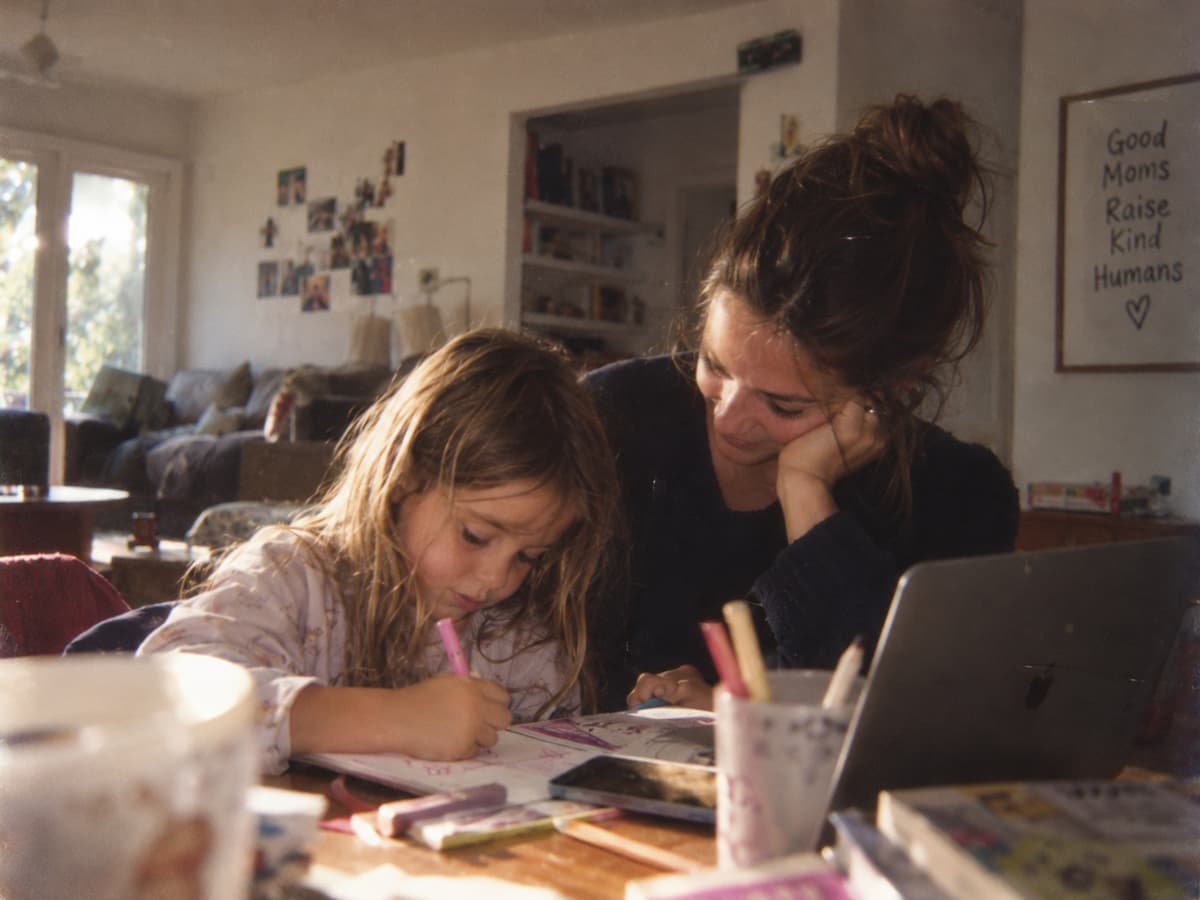
Boredom. Conversation. Making something badly the first time. Fighting over the rules. Waiting for your turn. Drawing without an undo button. A sibling inventing a new rule. A parent teaching a game they played as a child. A child disappearing into a book.
Those moments are not automatically better because they are analogue.
But they create types of participation that a passive scroll often does not.
That is why “less screen time” is an incomplete product brief.
The better brief is: what family behaviour do we want to make easier to choose?
The analogue bag works because it replaces, not restricts
The analogue bag is interesting because it is not primarily a ban.
It is substitution.
The phone impulse appears, and the bag offers another action: read, sketch, solve, knit, write, colour.
That matters psychologically and commercially.
A rule says no. A good product says try this instead.
Families know the difference.
The second approach creates less conflict because it competes through value, not authority.
Boredom is becoming a product opportunity
For years, digital products have treated boredom as a problem to eliminate.
The next piece of content is always available. The next level starts instantly. The next notification closes the gap.
Analogue play often works differently.
It leaves empty space.
The player has to set up. The child has to invent. The family has to decide what to do. The activity may begin slowly before it becomes absorbing.
That friction can look inefficient from a platform perspective.
Inside family life, it can be part of the value.
Boredom is sometimes the space where play begins.
Parents do not want another guilt product
The screen-time category is full of moral pressure.
Parents already know they should probably put the phone away more often. They already worry about their children’s devices. They already negotiate limits.
A brand that enters that conversation by making the parent feel worse is adding one more burden.
The stronger role is to make the alternative easier.
Do not tell a family to connect more. Give them something that creates connection.
Do not tell a child to be creative. Give them a reason to make something.
Do not tell everyone to log off. Build the thing they would rather do.
Analog does not mean nostalgic
There is a temptation to frame analogue culture entirely through nostalgia.
Vinyl. Film cameras. Old games. Letters. Crafts from childhood.
Nostalgia is part of the appeal, especially for parents and kidults.
But the stronger opportunity is not retro.
It is sensory.
Touching. Moving. Building. Drawing. Writing. Collecting. Turning pages. Rolling dice. Passing an object to someone else.
Those behaviours matter to children who have no nostalgia for a pre-smartphone world.
The analogue opportunity is therefore not about recreating the past.
It is about designing physical participation for the present.
The best family products create a reason to repeat
One-off detoxes rarely change family life.
Routines do.
Friday-night cards. A puzzle left on the table. A sketchbook in the car. The craft drawer. A game grandparents know how to play. Letters sent to someone far away. A ritual before bed.
This is where analogue products can move beyond purchase.
They can become part of the family routine.
And repeated family behaviour is exactly where products begin to earn deeper value in the Famdom System.
What brands should build now
Do not build “screen-free” as the whole proposition.
Build the better alternative.
Make starting easy. Make participation visible. Give several ages a role. Allow families to change the rules. Create enough depth to return. Design products that can stay out in the home rather than disappear into storage. Make the object worth sharing, gifting or passing on. Use digital content to teach, inspire or discover, then let the physical experience take over.
The strongest analogue products will not ask families to choose a side.
They will help them choose a moment.
What this means for family-first companies
The analogue revival is not evidence that families are turning against technology.
It is evidence that they are becoming more conscious of what they want technology to leave room for.
Play. Attention. Conversation. Creativity. Rest. Independence. Shared rituals.
That creates a much more interesting role for companies.
Do not sell abstinence.
Build participation.
A product wins when putting down the phone stops feeling like sacrifice because something better is already happening.
Inside this Debrief
- Why the analogue revival is being discovered through digital platforms
- What the analogue bag teaches us about substitution versus restriction
- Why boredom can be part of good play design
- How brands can reduce screen conflict without increasing parent guilt
- Why analogue value is sensory, not only nostalgic
- How offline products can become routines and family rituals
Sources and verification
- The Guardian, “The rise of the analogue bag: fashion’s answer to doomscrolling”, 9 January 2026.
- Pinterest Predicts 2026, “Pen Pals”: rise in searches for stamps, handwritten letters, pen-pal ideas and snail-mail gifts.
- Circana, US Toy Industry first-half 2026 results: Games & Puzzles and Arts & Crafts among growing supercategories.
- Circana, 2026 Global Toy Report: play expanding across ages, entertainment, creativity and connection.
- The Anxious Generation movement: advocacy for delayed smartphones/social media and a return to play-based, community-centred childhood.
Editorial note: The analogue revival combines social trends, consumer behaviour and advocacy around childhood and screen use; it should not be read as one unified movement or as evidence that families broadly reject technology. The interpretation that brands should create positive substitutes rather than anti-screen messaging is Famdom Observatory’s editorial view.
Debrief completo
Get the full Debrief
Déjanos tus datos y el Debrief completo es tuyo: el trabajo de campo, los tres aprendizajes y lo que una marca hace con ellos.
No ha llegado. Revisa tus datos e inténtalo de nuevo.
Also in the Observatory
 Debrief Fewer children are changing the economics of play. The future of toys is not only about fewer children. It is about more value being created across the whole family system around play.
Questions about this piece
What is the analogue bag trend?
The analogue bag is a tote filled with books, crosswords, sketchbooks, knitting, watercolours or other screen-free activities that people reach for instead of the phone. It became a recognisable social trend in 2026, alongside a Pinterest-reported revival of handwritten letters and pen pals and growth in Arts & Crafts and Games & Puzzles in the US toy market. Much of it is discovered and shared on the platforms people are trying to escape.
Why does the analogue revival matter for family-first companies?
The Debrief argues that families are not turning against technology. They are becoming more conscious of what they want it to leave room for: play, attention, conversation, creativity, rest and shared rituals. That gives companies a role beyond selling abstinence. A product wins when putting the phone down stops feeling like a sacrifice because something better is already happening, and when it becomes part of a repeated family routine.
Should family brands position their products as screen-free?
Not as the whole proposition, according to this Debrief. A rule says no, while a good product says try this instead, and that substitution creates less conflict than restriction. Brands should make starting easy, give several ages a role, create enough depth to return and use digital content to teach, inspire or discover before the physical experience takes over. Adding guilt for parents is the weaker route.